How to Prevent Roof Damage from Snow and Ice
Winter storms can turn a peaceful rooftop into a hazard zone. Snow piles up fast, ice creeps in quietly, and your home or business faces risks you might not even see coming. At Shindo Trust Roofing, we see firsthand how the weight of winter can test even the strongest roofs.
Ignoring snow and ice is like ignoring a leaky faucet. It might seem harmless at first—but over time, the damage adds up. Let’s break down the risks, the best prevention steps, and how to know when to call for help.
Snow and Ice Risks: More Than Just a Nuisance ❄️
Winter weather can be beautiful, but it’s rough on roofing. Here’s what’s at stake:
- Roof Collapse: Heavy snow acts like a thick, wet blanket. Too much weight and your roof can start to sag or even cave in—especially on flat or older roofs.
- Leaks and Water Damage: Melting snow can seep under shingles, freeze again at night, and cause cracks. Those tiny cracks become big leaks before you know it.
- Ice Dams: Picture a frozen beaver dam at your gutter. Warm air from inside melts the snow, which then refreezes at the eaves, trapping water and forcing it under shingles.
- Gutter and Downspout Damage: Ice weighs a ton. Gutters can bend, break, or detach from the house.
- Hidden Mold: Water sneaks in, soaks insulation, and mold starts to grow long before you spot a stain.
These aren’t just “maybe” issues. Building codes from the International Code Council (ICC) set strict standards for snow loads and ice barriers for a reason. Even a well-built roof can struggle if winter hits hard enough.
Prevention Measures: How to Outsmart Winter
Smart roofing is all about staying one step ahead. Here’s how to make your roof winter-ready:
1. Insulation and Ventilation Make All the Difference
Think of your attic like a wool hat for your house. With proper insulation, less heat escapes to melt the snow above, reducing the risk of ice dams. Good ventilation keeps the temperature steady and moisture levels low. If you’re not sure your system is up to code, check out our attic insulation and ventilation services.
2. Roof Rakes: Your First Line of Defense
A roof rake is a simple, long-handled tool. Use it after every major snowfall to clear the first few feet of snow off your roof—without ever climbing up. Always work from the ground. Never stand on an icy ladder.
3. Heating Cables: Invisible Helpers
Heating cables run along the edge of your roof or inside gutters. When winter gets fierce, they gently warm up trouble spots, stopping ice from building up. They require professional installation to ensure safety and efficiency.
4. Sealants and Flashing
Even the tiniest gap can let water in. Check the flashing (the metal strips around chimneys, vents, and skylights) and apply high-quality sealants where needed. Small cracks today can mean big leaks tomorrow.
5. Gutter Maintenance
Keep gutters and downspouts clear of leaves and debris. Ice and snow need a clear path to flow off the roof. Schedule a cleaning in late fall—before the first snow hits.
Safe Snow Removal: What Works, What to Avoid 🛑
Tempted to get up there with a shovel? Think again. Removing snow from a roof is risky business.
Do:
- Use a roof rake from the ground.
- Clear snow early—before it packs down and gets heavy.
- Wear non-slip boots if you absolutely must use a ladder (better yet, don’t).
Don’t:
- Don’t use sharp tools that can gouge shingles.
- Don’t chip at ice dams with an ax—it will damage your roof and could hurt you.
- Don’t use salt or harsh chemicals; they can corrode metal and ruin shingles.
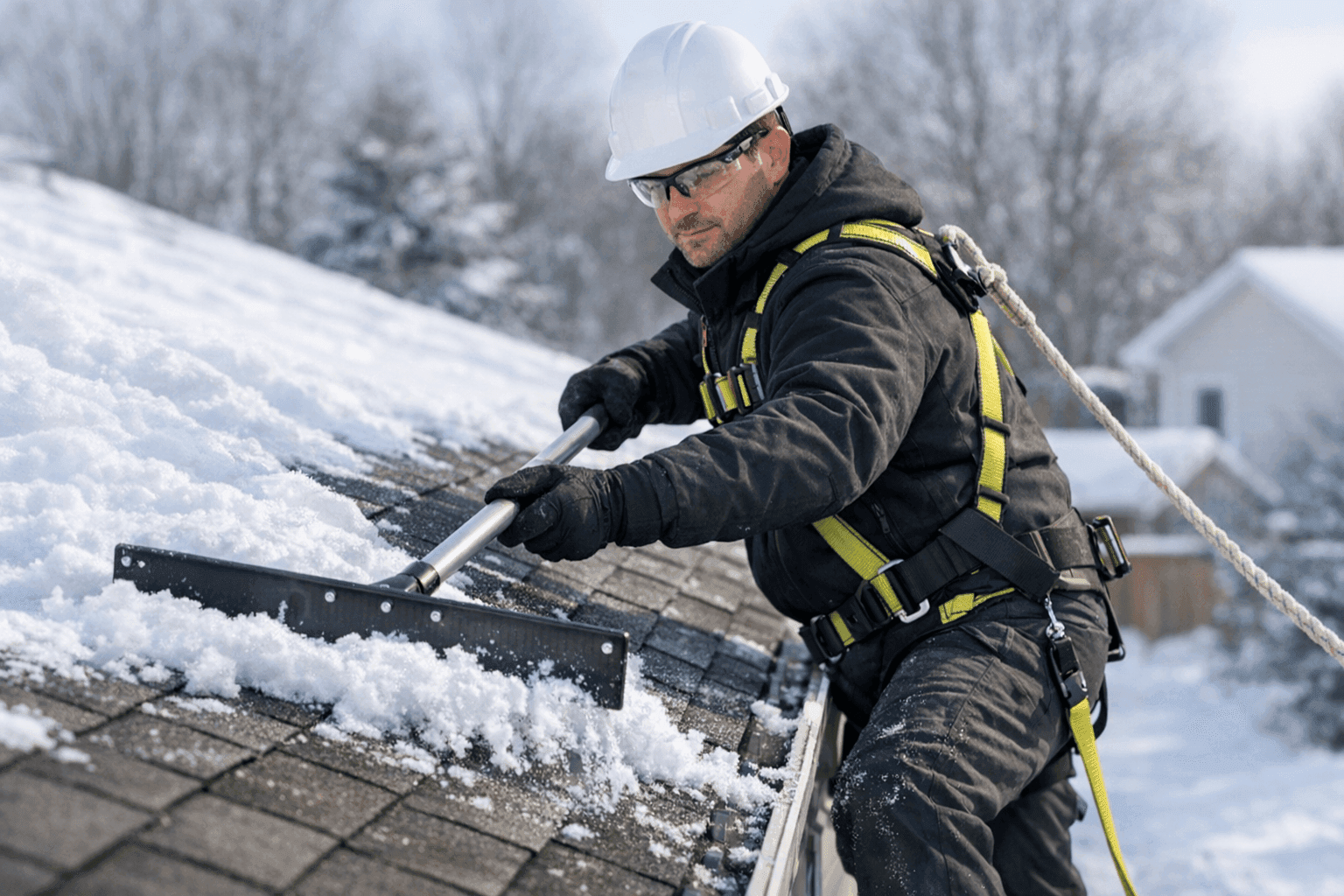
If you’re facing more than a few inches or see signs of sagging, it’s time to step back. Let trained crews, equipped with safety harnesses and proper tools, handle the tough jobs.
Signs of Trouble: What to Watch For
Winter roof damage can sneak up quietly. Keep an eye out for:
- Water stains on ceilings or walls
- Icicles forming along the eaves (a classic ice dam warning)
- Warped or cracked shingles
- Sagging roof lines
- Doors suddenly sticking (could mean the roof is shifting)
If you notice any of these, don’t wait. Fast action can save you thousands in repairs.
When to Call a Pro: Know Your Limits
Some jobs are just too risky for DIY—especially on icy roofs. If you see visible sagging, hear strange creaks, or spot water dripping inside, call for help immediately. For those in Arkansas, our crews are equipped for harsh winters and ready to handle urgent calls in Conway and nearby areas.
Professional Solutions: What Roofing Crews Do Differently 🧰
A professional team brings more than just ladders. Here’s what you can expect:
- Full inspection, inside and out, for hidden leaks or damage
- Safe removal of snow and ice using industry-standard equipment
- Repair of damaged shingles, flashing, and gutters
- Recommendations for insulation upgrades and ventilation improvements
- Documentation for insurance or warranty claims
We always follow OSHA safety guidelines, use fall-prevention gear, and keep your property secure from start to finish—no shortcuts, no risk-taking.
Insurance and Warranty Considerations
Dealing with winter damage? Insurance and manufacturer warranties might help, but only if you’ve kept up with maintenance. Most policies require proof of regular care—like cleaning gutters and fixing minor leaks. Neglect can void coverage. Keep a folder with receipts, inspection reports, and photos. That way, you’re ready if you ever need to file a claim.
Timeline and Disruption: What to Expect
Most snow and ice removal jobs take just a few hours if caught early. Major repairs, like replacing rotted decking or fixing structural damage, can take longer—sometimes a few days, depending on weather and materials. During work, expect some noise and foot traffic, but we always aim to keep disruptions minimal and tidy up thoroughly.
Costs: What’s “Normal” for Winter Roof Care?
Costs depend on roof size, pitch, and the type of service needed. Preventative maintenance—like an annual inspection and gutter cleaning—is usually affordable, especially compared to emergency repairs. Emergency work or structural fixes run higher. Investing in prevention is almost always cheaper than repairing after the fact.
Common Mistakes Homeowners Make
- Waiting too long to clear snow.
- Ignoring small leaks until spring.
- Trying risky DIY repairs.
- Skipping regular inspections and gutter cleaning.
- Failing to document maintenance for insurance.
Avoid these pitfalls and your roof will thank you.
Materials and Equipment: What We Use
Shindo Trust Roofing uses only roofing-grade tools, safety gear, and certified materials. For example: heavy-duty roof rakes, industrial-grade heating cables, non-corrosive sealants, and certified fall-protection harnesses. We follow all local building codes and manufacturer guidelines.
Preventative Maintenance: The Smartest Investment
Roofing, like any part of your property, needs regular care. Schedule an annual inspection before winter. Clear gutters, check attic insulation, and look for loose shingles. Even a quick visual check after every storm can make a big difference.
Preventative steps don’t just save you money—they help your roof last longer and keep insurance valid. And if you ever need a hand, our ventilation and insulation experts are here to help.
Seasonal Considerations: Timing Matters 🌨️
Fall is the best time for a full inspection and any needed repairs. Winter is all about spot checks after storms, especially if you see heavy snow or ice buildup. Spring is for checking for hidden leaks or damage left behind. If you’re in a region that gets heavy snow, make seasonal maintenance a habit.
FAQ: Quick Answers to Cold-Weather Roofing Questions
How much snow is too much?
Generally, more than a foot of wet snow is cause for concern, but it depends on your roof’s design and age.
Are ice dams always visible?
Not always. Sometimes they’re hidden under the snow, only showing up as leaks inside.
Can I use salt on my roof?
No. Salt can damage shingles and metal parts. Use only products labeled safe for roofing.
Is winter roof work safe?
With the right equipment and training, yes. For homeowners, it’s best to stay on the ground and call a pro if in doubt.
Cold-Weather Roofing Takes Skill—and Safety
Shindo Trust Roofing’s crews are trained to handle winter hazards, from rooftop snowdrifts to hidden leaks. We work safely, efficiently, and always with your property’s long-term health in mind. The best defense against winter damage? Stay vigilant, act early, and never take unnecessary risks.
Call Shindo Trust Roofing now — or reach us anytime at 888-698-1884 .