Residential vs. Commercial Roofing: Key Differences
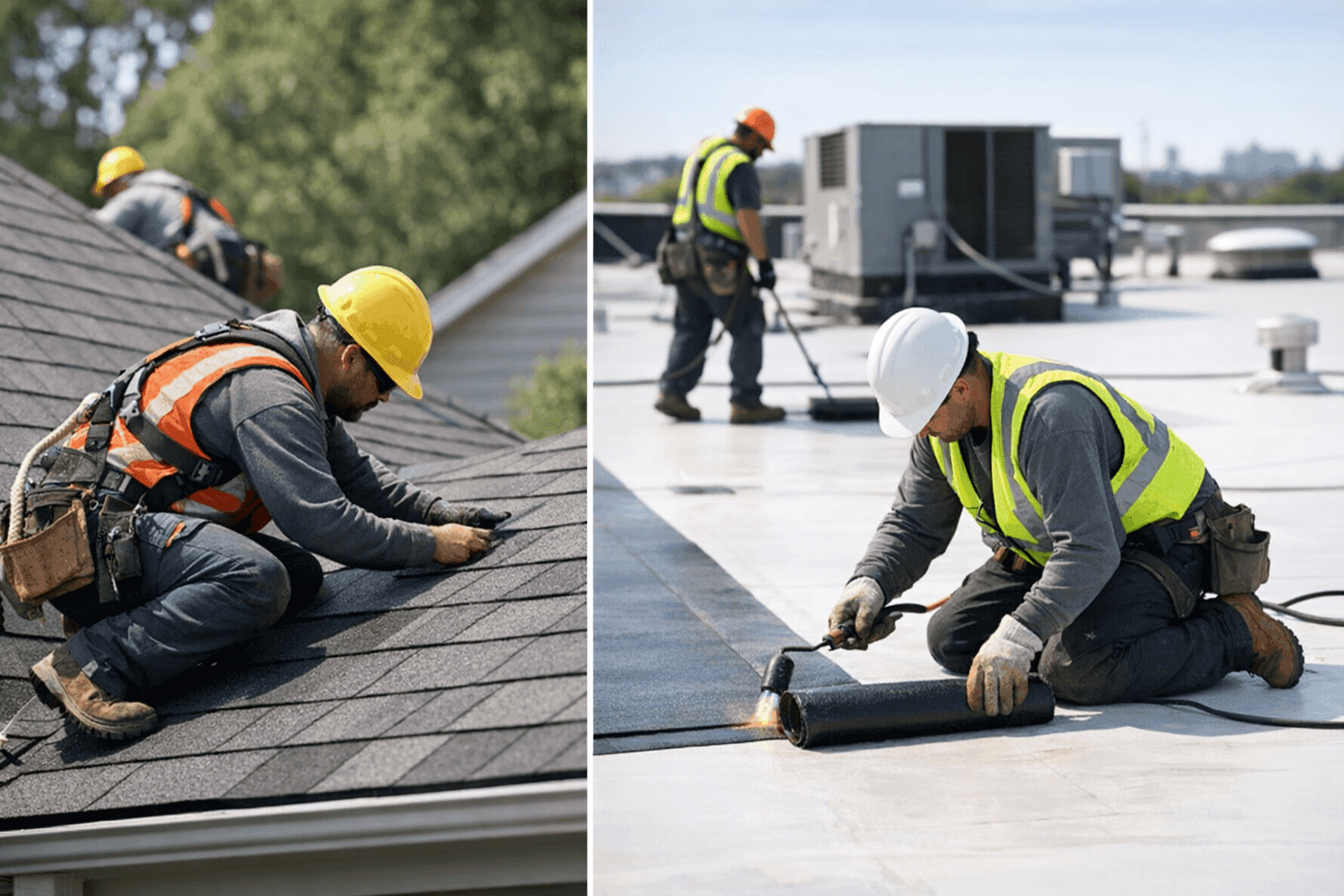
When you look up at a roof, it might seem like just another hat on a building. But underneath those shingles or panels lies a world of difference—especially when you compare homes to businesses. At Shindo Trust Roofing, we know how crucial it is to choose the right roof for your needs. The stakes are high, whether you’re protecting your family, your tenants, or your livelihood.
Let’s break down how residential and commercial roofing truly differ. Understanding these contrasts can help you make better, safer decisions when it’s time for repairs, upgrades, or new installations.
Structural Differences: The Backbone of Every Roof 🏗️
Think of a residential roof like a sloped umbrella, designed to shed rain and snow quickly. Most homes use pitched roofs, which help water roll away and add a cozy, classic look to the neighborhood. Underneath, wood trusses and rafters create a sturdy skeleton.
Commercial roofs, on the other hand, usually sprawl out flat—like a giant tabletop. This design isn’t just for looks; it’s practical. Flat roofs make it easier to install HVAC units, solar panels, or even green spaces. To support this weight, commercial buildings rely on steel beams, reinforced concrete, or heavy-duty decking.
Flat vs. Pitched: Why It Matters
- Pitched Roofs (Residential): Excellent for drainage, common in homes, and often visible from the street.
- Flat Roofs (Commercial): Easier access for maintenance, ideal for large buildings, but require careful waterproofing.
Local building codes—like those outlined by the International Building Code (IBC)—set strict rules for both types. Always ensure your project meets these standards for safety and durability.
Material Choices: What’s Over Your Head
The materials you choose are like the armor of your building. For residential roofing, asphalt shingles reign supreme. They’re affordable, come in many colors, and handle most weather with ease. Other popular options include wood shakes, metal panels, clay tiles, and even eco-friendly choices like recycled shingles.
Commercial roofs often use single-ply membranes (like TPO or EPDM), built-up roofing (BUR), or metal panels. These materials are chosen for their ability to cover large, flat areas and resist foot traffic, standing water, and harsh sun.
Comparing Material Lifespans
- Shingle Roofing: 15–30 years (with regular care)
- Metal Roofing: 40–70 years
- Single-Ply Membranes: 20–30 years
- Tile Roofing: 50+ years
Each option has its own pros and cons. The right fit depends on your climate, building design, and budget.
Maintenance Needs: Keeping Trouble at Bay 🧰
Roofs don’t last forever. But with the right maintenance, you can stretch their lifespan and avoid headaches.
Residential Maintenance
For homes, regular inspections and cleaning go a long way. Look for missing shingles, clogged gutters, or signs of leaks in the attic. Seasonal roof checks—especially after storms—help catch small problems before they grow.
Commercial Maintenance
Commercial roofs need a different approach. Flat roofs can collect water, debris, or even stray tools from HVAC workers. Scheduled inspections, membrane checks, and prompt repairs are key. Many businesses opt for preventative maintenance programs to catch issues early and avoid costly disruptions.
Budgeting and Lifespan: Planning for the Long Haul
Cost is always top of mind. Homeowners often focus on upfront price and curb appeal. Businesses, meanwhile, weigh long-term value, energy savings, and how repairs might disrupt daily operations.
- Residential roofs: Usually less expensive to install, but may need more frequent repairs depending on material and weather.
- Commercial roofs: Higher initial cost, but longer lifespan and better suited for large, complex structures.
Permitting and insurance requirements can affect both types. Always check local guidelines before starting a project.
Insulation Requirements: Staying Comfortable and Efficient
A roof isn’t just a shield; it’s a blanket for your building. Insulation keeps heat in during winter and out during summer.
- Homes: Often use batt or blown-in insulation between rafters. Proper ventilation prevents mold and ice dams.
- Businesses: Flat roofs require rigid foam or spray-on insulation above the deck. Energy codes (like ASHRAE 90.1) set minimum standards for commercial buildings.
Well-insulated roofs lower energy bills and boost comfort for everyone inside.
Regulatory Compliance: Playing by the Rules
Building codes aren’t just red tape—they’re there for your safety. Residential and commercial roofs must meet different standards for fire resistance, wind uplift, and structural loads.
- Residential codes: Focus on local climate and neighborhood aesthetics.
- Commercial codes: Address fire safety, accessibility, and equipment loads.
Always work with a licensed contractor who follows the latest codes and manufacturer guidelines.
Signs of Trouble: When to Worry
No one wants a leaky roof. But how do you know when it’s time to act?
Watch for These Red Flags
- Water stains on ceilings or walls
- Sagging rooflines
- Missing or cracked shingles
- Pools of water on flat roofs
- Mold or musty smells inside
If you spot any of these, don’t wait. Early action can prevent bigger, costlier repairs.
Prevention & Maintenance: Tips from the Field
A little care goes a long way. Here are some quick tips to keep your roof in top shape:
- Clean gutters and downspouts every season.
- Trim overhanging branches to prevent debris buildup.
- Schedule annual inspections—especially after severe weather.
- Address small leaks right away.
When in doubt, call a professional. Roofing work can be dangerous, and a trained eye often spots problems you might miss.
Timeline & Disruption: What to Expect During Work
Roof projects can disrupt your routine. For homes, most jobs wrap up in a few days. Businesses may need to plan work around operating hours or safety regulations.
- Residential: Expect some noise, dust, and limited access to driveways or yards.
- Commercial: May require temporary closures or restricted access to certain areas.
Clear communication with your contractor helps minimize surprises.
When It’s an Emergency: Fast Action Matters 🚨
Storms, fallen trees, or sudden leaks can turn a normal day upside down. In these moments, quick thinking is vital.
For business owners, a major leak can halt operations or damage valuable inventory. Homeowners may face water damage or even safety hazards.
If you’re facing urgent roof issues, professional help is just a call away. For those needing Charleston roofing services, our team is available for emergency repairs and guidance.
DIY vs. Professional Help: Know Your Limits
Some small fixes—like cleaning gutters or replacing a shingle—are safe for handy homeowners. But most roofing work requires special tools, safety gear, and know-how.
- DIY: Clean gutters, inspect from the ground, trim branches.
- Call a pro: Leak repairs, structural fixes, full replacements.
Professional crews have the training and insurance to work safely at heights and handle complex repairs.
Case Examples: Real-World Lessons
- A local bakery: Their flat roof developed a persistent leak after heavy rains. Our team found clogged drains and deteriorated membrane seams. After a thorough cleaning and targeted repairs, the business stayed open—with no more drips over the pastry case.
- A family home: Missing shingles after a windstorm led to attic leaks. We replaced the damaged sections, checked the insulation, and restored peace of mind—just in time for the next rain.
Every roof tells a story. The right care and materials make all the difference.
Eco-Friendly Options: Roofing for a Greener Tomorrow 🌱
Both homes and businesses are looking for sustainable choices. Cool roofs, recycled shingles, and solar panels help cut energy use and reduce environmental impact.
Ask your contractor about eco-friendly materials and installation methods that fit your goals.
Common Mistakes to Avoid
- Ignoring small leaks
- Skipping annual inspections
- Using the wrong materials for your building type
- Hiring unlicensed contractors
Learning from others’ missteps can save you time, money, and stress.
FAQ: Your Roofing Questions Answered
Q: How do I choose between shingle and metal roofing?
A: Consider your budget, climate, and how long you plan to stay in the building. Shingles are popular for homes; metal lasts longer and works for both settings.
Q: How often should I inspect my roof?
A: At least once a year, plus after major storms.
Q: Do commercial roofs need more maintenance?
A: They’re larger and flatter, so yes—regular checks are a must.
Choosing the Right Partner
Selecting a roofing contractor isn’t just about price. Look for experience, proper licensing, and a clear understanding of your building’s unique needs. For tailored commercial roofing solutions, work with teams who know the ropes—literally and figuratively.
Seasonal Considerations: Timing Your Project
Weather plays a big role in roofing. Spring and fall are ideal for installations and repairs. Winter snow or summer heat can slow things down or limit material choices.
If you’re planning work, book early to avoid seasonal backlogs and ensure your project stays on track.
Call Shindo Trust Roofing now — or reach us anytime at 888-698-1884 .