Roof Leak Detection: Tools and Techniques Used by Pros
Is there a dark stain on your ceiling? Maybe you’ve noticed a musty smell after the last rain. Roof leaks are sneaky. They start small—almost invisible. But left unchecked, they can cause serious damage to your home or business.
At Shindo Trust Roofing, we understand how stressful it is when water finds its way inside. Our team is trained to spot what most eyes miss. We use advanced tools and proven techniques to get to the root of the problem—fast.
Common Leak Sources
A roof is more than shingles and nails. It’s a shield. But even the best shield has weak spots. Here’s where leaks love to hide:
- Cracked or missing shingles (especially after storms)
- Rusted or damaged flashing around chimneys and skylights
- Clogged gutters and downspouts
- Poorly sealed roof valleys
- Worn-out vent boots and seals
- Damaged underlayment or decking
- Aging skylights and roof penetrations
These trouble spots often go unnoticed until the damage is obvious. Water travels, winding its way behind walls or across beams before you ever see a drip.
The Hidden Dangers of Roof Leaks
A leak isn’t just a puddle on the floor. Water can rot wood, weaken structural supports, and breed mold. Over time, even a tiny leak can turn into a costly repair. Insurance claims for water damage are among the most common—and the most expensive—according to the Insurance Information Institute.
Diagnostic Tools: How Pros Track Down Leaks
The best roofing teams use more than just a flashlight. Here’s how we stay ahead of the curve:
-
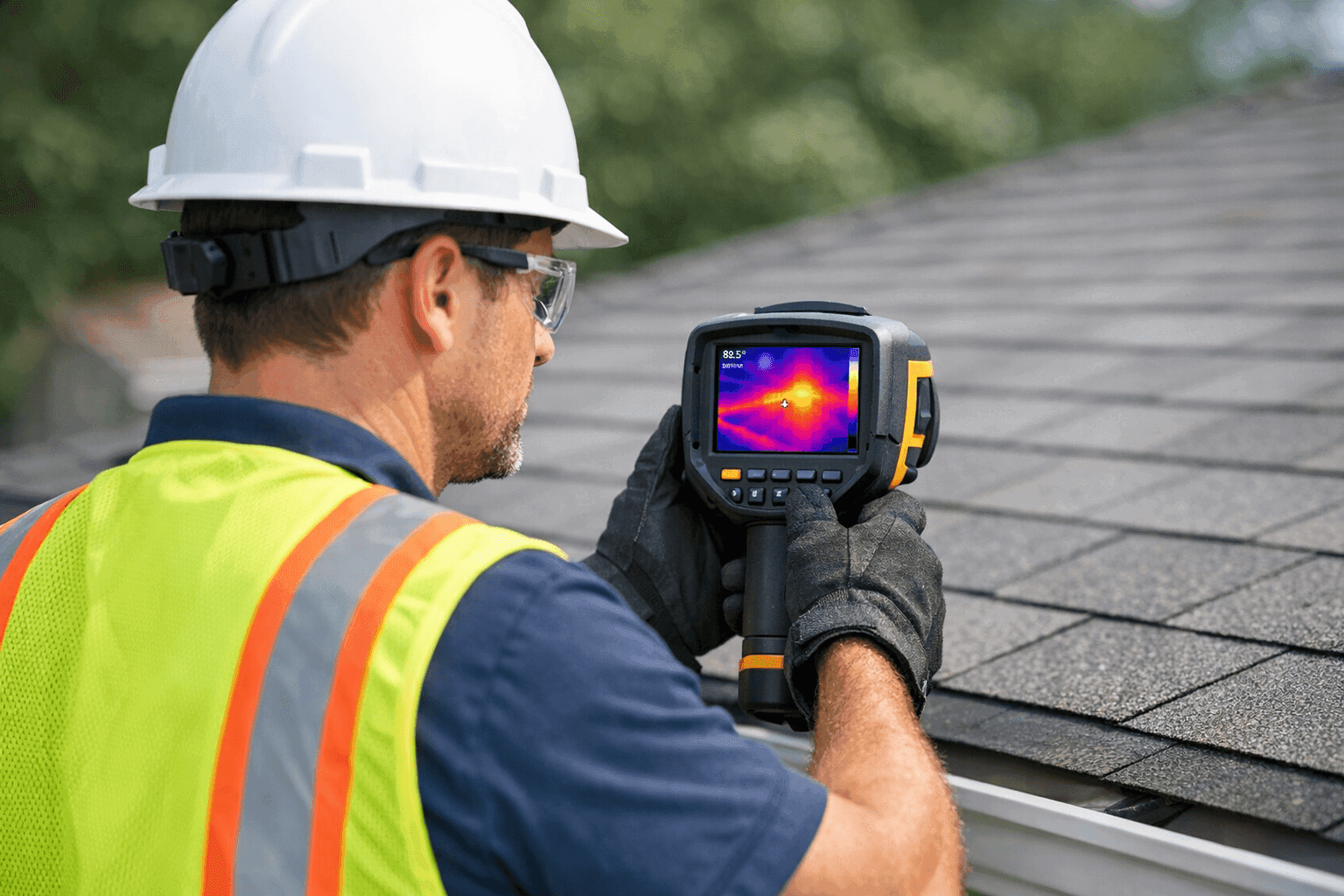
Thermal Imaging Cameras 🛠️
These devices “see” temperature differences. Wet spots are cooler than dry ones. A quick scan can reveal hidden moisture inside walls or ceilings—no guesswork. -
Moisture Meters
Pinpoint the exact level of moisture in wood, insulation, or drywall. If the reading is high, we know water has traveled there. -
Water Tracing Dyes
Sometimes, we use safe, colored dyes to track water’s path. This helps us see exactly where the leak starts and ends. -
Electronic Leak Detectors
These measure electrical resistance in materials. Damp spots conduct electricity differently than dry ones, revealing the leak’s location. -
Endoscopes and Inspection Cameras
For hard-to-reach spaces, a flexible camera lets us look inside attics, behind chimneys, or under shingles without tearing things apart.
Each tool tells part of the story. Together, they help us build a complete picture—so repairs fix the real problem, not just the symptoms.
Step-by-Step Leak Detection: The Pro’s Approach
Every roof is different, but our process is consistent and thorough. Here’s what happens when you call in the pros:
1. Visual Inspection
We start by examining the roof’s surface, looking for obvious signs—missing shingles, rusted flashing, or debris.
2. Attic and Interior Check
Inside, we search for water stains, mold, or warped wood. Sometimes, the leak is far from where you see the damage.
3. Moisture Mapping
Using thermal imaging and moisture meters, we scan the roof, attic, and walls. This helps us trace the water’s journey.
4. Controlled Water Testing
If needed, we use hoses and tracing dyes to simulate rain. This can reveal leaks that only show up in certain conditions.
5. Documentation and Reporting
We document what we find, often with photos or video. This helps you understand the problem—and the solution.
6. Repair Recommendations
Once we pinpoint the leak, we recommend targeted repairs. No unnecessary replacements. No band-aid fixes.
Why DIY Detection Often Misses the Mark
It’s tempting to grab a ladder and look for leaks yourself. But without the right tools and training, it’s like looking for a needle in a haystack—blindfolded.
- Water doesn’t always travel straight down. It can run along rafters, pipes, or beams before surfacing.
- Many leaks are invisible to the naked eye until major damage has occurred.
- Climbing on roofs is risky. Falls are a leading cause of home injuries, according to OSHA.
Certified roofing technicians undergo specialized training in leak detection. They know building codes, safety protocols, and how to interpret what the tools reveal. That’s why professional inspections catch problems early—saving you money and headaches.
For a deeper look at what goes into roof inspections, see how certified pros approach every detail.
Benefits of Professional Leak Detection
Why trust the pros? Here’s what you gain:
- Accurate Diagnosis: We find the source, not just the symptoms.
- Faster Repairs: With the right tools, leaks are found and fixed quickly.
- Cost Savings: Early detection means smaller, less expensive repairs.
- Safety: No risky climbs or guesswork.
- Documentation: Detailed reports can help with insurance claims or future maintenance.
Safety First: Quick Checklist
Before anyone climbs a ladder or enters the attic, safety comes first:
- Wear non-slip shoes and use a sturdy ladder.
- Never inspect a wet or icy roof.
- Use protective gear—gloves, goggles, and a dust mask.
- Keep children and pets away from the work area.
When in doubt, leave it to the professionals. Your safety is always worth more than a quick fix.
When It’s an Emergency
Some leaks can’t wait. If water is pouring in or electrical systems are at risk, act fast. Turn off power to affected areas and place buckets to catch drips. Then call for help.
If you need immediate leak repair, our certified team responds quickly—minimizing damage and restoring peace of mind.
Seasonal Considerations: Rain, Snow, and Heat
Leaks often show up after heavy rain, snowmelt, or sudden temperature swings. In spring and fall, check your attic for new stains or musty smells. After major storms, inspect gutters and downspouts for blockages.
For those seeking North Las Vegas roofing services, our team is equipped to respond to seasonal challenges and emergencies in your area.
Preventative Maintenance: Stop Leaks Before They Start
The best leak is the one that never happens. Schedule regular inspections—especially if your roof is over 10 years old. Clean gutters and downspouts every season. Trim overhanging branches and clear debris from the roof.
A little care goes a long way toward protecting your investment.
Materials and Equipment Matter
Quality materials make a difference. We use industry-approved sealants, flashing, and underlayment that meet or exceed local building codes. Our diagnostic tools are calibrated regularly to ensure accuracy.
Always choose a roofing contractor who invests in proper equipment and ongoing training. The National Roofing Contractors Association (NRCA) and OSHA provide guidelines that top teams follow.
What to Expect: Timeline and Disruption
Most leak detection visits take a few hours, depending on roof size and complexity. Repairs can range from a quick patch to a full-day job. We always respect your property—using drop cloths and cleaning up thoroughly when finished.
Common Mistakes Homeowners Make
- Ignoring small stains or musty smells
- Using caulk or tar as a “quick fix”
- Delaying repairs until the next rainstorm
- Walking on the roof without proper safety gear
Don’t let a small leak become a big headache. Early action is key.
Signs You Might Have a Hidden Leak
- Water stains on ceilings or walls
- Peeling paint or bubbling wallpaper
- Sagging drywall or wood
- Moldy or musty odors
- Sudden spikes in energy bills (from wet insulation)
If you notice any of these, it’s time to call in the pros.
When to Call an Expert
If you’re unsure where the water is coming from—or if you’ve tried to fix it and the problem keeps coming back—a professional assessment is the smartest move. Certified roofers use advanced tools and follow strict quality control protocols, so nothing gets missed.
FAQ: Your Leak Detection Questions Answered
Q: Can a roof leak fix itself?
A: No. Even minor leaks get worse over time.
Q: How soon should I address a leak?
A: Immediately. Water damage spreads fast.
Q: Are all leaks visible?
A: Most aren’t. That’s why we use thermal imaging and moisture meters.
Q: Will insurance cover roof leaks?
A: It depends on your policy and the cause. Documentation helps your claim.
Q: How often should I have my roof inspected?
A: We recommend an annual check, plus after major storms.
Protect your property. Act early. For advanced diagnostics, certified repairs, and peace of mind, Shindo Trust Roofing is here for you.
Call Shindo Trust Roofing now — or reach us anytime at 888-698-1884 .