Shingle Roofing Maintenance: DIY and Pro Tips
A shingle roof isn’t just a cap on your home or business—it’s the shield that stands between your life and the weather. When it’s healthy, you hardly think about it. But a little neglect? That’s when trouble creeps in, quietly, like water finding a crack.
At Shindo Trust Roofing, we know even the sturdiest roofs need regular care. Whether you’re a homeowner or manage a commercial property, understanding how to maintain your shingle roofing can save you headaches, leaks, and unexpected expenses down the road.
Shingle Roof Care: Why It Matters
Your shingle roof is a bit like a raincoat for your whole building. If it’s torn, clogged, or worn out, everything underneath is at risk. Routine maintenance not only extends the life of your roof, but also keeps your warranty valid—most manufacturers require periodic inspections and upkeep as part of their guidelines (see GAF and CertainTeed shingle care recommendations).
Neglected roofs often face:
- Leaks and water stains
- Mold or algae growth
- Increased energy bills
- Early replacement costs
A little attention now means more peace of mind later.
Quick Safety Checklist 🦺
Before you set foot on a ladder, take a breath. Roof maintenance is not without risk. Here’s your pre-check:
- Use a sturdy, well-placed ladder with rubber feet
- Never work alone—have someone spot you
- Wear shoes with strong grip (not sandals)
- Avoid working when the roof is wet, icy, or during storms
- Stay clear of overhead power lines
If you’re unsure or uncomfortable, stop. Your safety is worth more than any shingle.
DIY Maintenance: What You Can Safely Tackle
Some roof care tasks are safe for most homeowners, provided you’re careful. Think of these as the basics—like keeping your car’s windshield clean so you can see the road.
Debris Removal
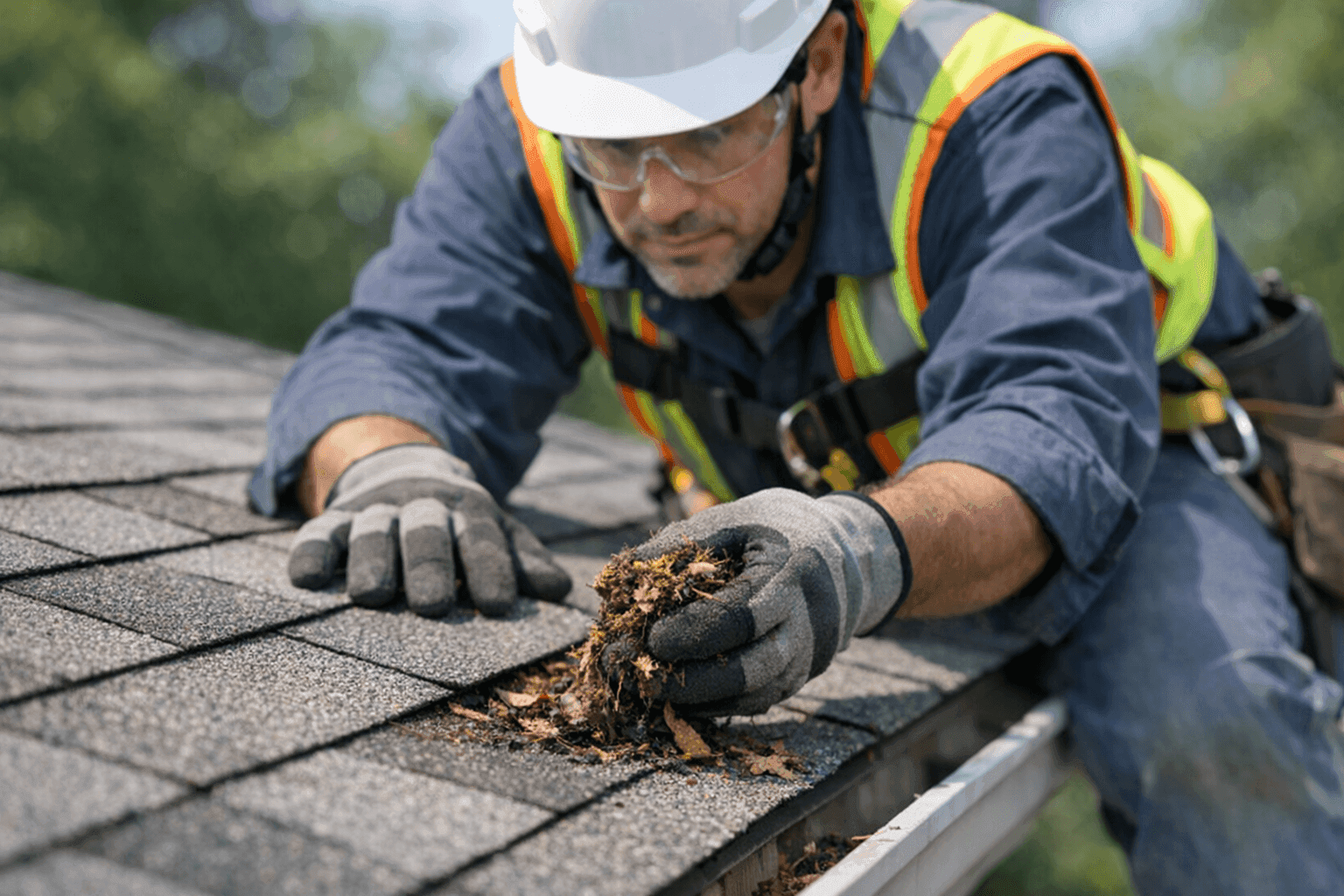
Leaves, twigs, and seed pods pile up in valleys and gutters. Over time, they can dam water, causing leaks or rot. Using a soft brush or leaf blower, gently clear debris from the roof surface and gutters at least twice a year.
Granule Check
Shingles shed small granules over time. A few in the gutters is normal, but a handful or more means aging shingles. Scoop out a little gutter debris and look—if it feels gritty, it’s time for a closer look.
Visual Shingle Inspections
Walk the property (from the ground, binoculars help!) and look for:
- Curled or buckled shingles
- Missing or cracked tabs
- Moss or algae streaks
Spotting these early means easier fixes later.
Gutter Cleaning
Clogged gutters can back up water, sending it under shingles or down siding. Clean gutters and downspouts every spring and fall, or after a big storm.
What’s Best Left to the Pros
Some tasks are like tackling a bear with a stick. Leave these to licensed roofing professionals:
- Shingle repairs or replacements, especially on steep roofs
- Flashing inspection and repair (metal strips around chimneys, skylights, vents)
- Structural or decking repairs
- Full roof inspections (especially if your warranty requires a pro’s touch)
- Leak tracing and emergency storm damage fixes
Pros have harnesses, proper ladders, and know how to spot issues you might miss. They’re also up-to-date with local building codes and manufacturer requirements.
Shingle Repairs: The Right Approach
If you spot a missing or damaged shingle, resist the urge to patch it with tar or store-bought goop. Improper repairs can void your warranty and may not stop leaks. The National Roofing Contractors Association recommends using matching shingles and nails, installed under the existing row, and secured with roofing cement. When in doubt, call a certified technician.
Flashing: The Hidden Guardian
Flashing is the unsung hero of your roof—thin metal strips sealing edges and joints. Damaged flashing is a common source of hidden leaks, especially near chimneys and skylights. A pro should inspect flashing every year, as even a tiny gap can lead to big problems.
Preventative Maintenance: Small Steps, Big Results
A few simple routines make a world of difference. The best time? Spring and fall—before and after severe weather seasons.
- Clear debris and check gutters
- Look for sagging or soft spots
- Check for animal nests or insect damage
- Trim overhanging branches to limit shingle wear
Remember, many shingle manufacturers (like Owens Corning and Atlas) require documentation of regular maintenance for warranty claims. Keep a log and photos of your inspections.
Seasonal Considerations 🍂
Winter snow, spring storms, and summer heat each test your roof in different ways. After heavy weather, it’s smart to:
- Check for missing shingles or blown-off tabs
- Inspect attic ceilings for water stains
- Clear ice dams or snow buildup (or call a pro)
If you’re in the Northeast, Midwest, or anywhere storms hit hard, it pays to be extra vigilant. Burlington-area property owners can find info on local support at our Burlington roofing page.
Common Mistakes to Avoid
- Power washing shingles (can strip away protective granules)
- Ignoring small leaks (“It’s just a drip” often leads to costly damage)
- Walking on the roof in hot weather (shingles can soften and scuff)
- Using mismatched or leftover shingles for repairs
Avoid shortcuts—your roof’s value is in the details.
Signs of Trouble: When to Act Fast
Don’t wait if you notice:
- Water stains on ceilings or walls
- Shingles in the yard after storms
- Sagging roof lines
- Mold, mildew, or musty attic smells
A small issue today can be a big (and expensive) problem tomorrow.
When to Repair or Replace
How do you know if it’s time for a patch or a full redo? Age is a big clue—a typical shingle roof lasts 15–30 years, depending on material and climate. If repairs are frequent, or half the shingles look worn, replacement may be the better long-term solution. Professional roofers can assess whether a repair will buy you years or just months.
Learn about full replacement options and see what’s involved at our shingle roofing service page.
Timeline & Disruption: What to Expect
Most maintenance tasks take a few hours. Repairs can last a day or two, depending on weather and the extent of the damage. Full replacements are bigger jobs, but a reputable crew will keep noise and disruption to a minimum, following Occupational Safety and Health Administration (OSHA) safety standards.
Materials and Equipment
If you’re planning basic upkeep, you’ll need:
- Soft-bristled broom or brush
- Garden hose (never pressure washers)
- Binoculars
- Work gloves
- Extension ladder with stabilizer
Leave specialty tools—like roofing nail guns and harnesses—to the pros.
Emergency? Don’t Wait
Storms don’t keep business hours. If you have an active leak, missing shingles after a wind event, or evidence of major water intrusion, don’t delay. Quick action limits damage and keeps insurance claims smoother.
FAQ: Shingle Roofing Near You
How often should I inspect my shingle roof?
Twice a year—spring and fall—and after major storms.
Can I walk on my roof to check for damage?
If it’s low slope, dry, and you’re confident, yes. But most inspections can be done from the ground with binoculars.
What if I see black streaks or moss?
Moss can trap moisture and shorten shingle life. Gently remove with a brush or call a professional for safe cleaning.
Will maintenance affect my roof warranty?
Most manufacturer warranties require documented maintenance. Save your inspection notes and photos.
Final Thoughts
Regular shingle roof maintenance is the difference between a roof that lasts—and one that lets you down when you need it most. DIY steps handle the basics, but don’t hesitate to call for help when things get complicated.
Call Shindo Trust Roofing now — or reach us anytime at 888-698-1884 .